
Bridging the Gaps: Improving Access to Culturally Specific Care

We sat down with Joefin Peter to discuss the lack of representation of BIPOC providers in sexual and reproductive health. Joefin emphasizes the importance of culturally specific care for racialized individuals and highlights how initiatives like the BIPOC Maternal Professionals Database are helping make this care more accessible…
In Conversation With The Mental Health Commission of Canada

The mental health of employees is foundational to creating a diverse, equitable, and inclusive (DEI) organizational culture because psychological well-being enables individuals—especially those from marginalized or underrepresented groups—to engage fully and safely at work. Likewise, strong DEI programs can positively influence mental health by addressing systemic stressors and creating conditions for all employees to thrive.
DEI Backlash and Canadian Organizations

How Canadian Organizations Should Respond to the Backlash Against Diversity, Equity, and Inclusion
For many years, Diversity, Equity, and Inclusion (DEI) initiatives have become a cornerstone of workplace culture in Canada. Many organizations recognize that these initiatives contribute to creativity, talent recruitment, and growth. But recent court decisions in the United States, actions taken by the Trump administration, and political misinformation about DEI in the US and Canada have all added to increasing resistance to diversity, equity and inclusion. Even some organizations that prioritized these initiatives a mere five years ago (after a White police officer killed Black American George Floyd, which led to widespread protests) have pulled back or softened their approach.
Inclusive City Planning: Q&A with Alexandra Lambropoulos

Inclusion, diversity, equity, and anti-racism (IDEA) are foundational to my work in urban planning because cities thrive when they reflect and serve the diverse populations that inhabit them. IDEA informs my personal research interests in community economic development because it focuses on building strong, resilient local economies that benefit all residents.
Off the Bookshelf: North of Nowhere

Marie Wilson’s newly-published “North of Nowhere: Song of a Truth and Reconciliation Commissioner” is a tour de force.
Richly woven, it is part memoir, part documentary. It’s also the kind of book you’ll want to read more than once – not only because it reveals an important part of Canadian history, but because the overall story is so compellingly told.
The book starts with a story about Wilson’s mother-in-law watching Canadian TV at home in the Northwest Territories.
Well, America, You Are Welcome!

“In Springfield, they are eating the dogs… [Haitians] are eating the pets of the people that live there.” – Donald Trump
Before we address the culinary habits of my Kin, I wanted to begin by raising the illustrious feat of winning a war without the trappings of conventional warfare, as Haitians are poised, once again, to fight in the war for democracy in the U.S. without any act of violence. This time our sheer migrant presence might be the weapon. Once done, we can then argue about whether dogs taste like chicken, or vice versa! Oh…the inhumanity of it.
Understanding the Mind-Body Connection to Make More Mindful Choices for Inclusion
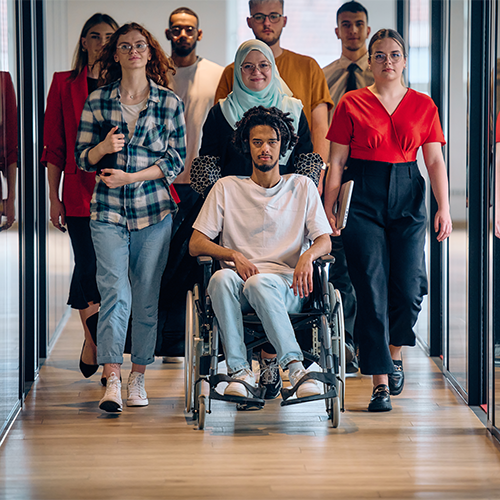
As an interculturalist engaged in IDEA and intercultural capacity building, I see myself as a lifelong learner who recognizes that there is always more to discover and understand. I am passionate about guiding individuals toward those “aha!” moments that spark their curiosity and foster deeper connections across differences. As the daughter of immigrants, although I was born in Canada, English was my second language. Assimilation was still the model then. To ease the effects of culture shock and foster community connections, my parents were inclined to connect with people who came from similar ethnic backgrounds. However, back then, all I wanted was to be Canadian – to blend in, to belong. Our family also moved around a lot and as they did that my thirst for belonging grew…
Reading for Reconciliation: Indigenous Reading List

As the Month of June is National Indigenous History Month in Canada, it is a great time to explore the world of Indigenous literature. Reading books written by Indigenous authors serves as a gateway to understanding Indigenous culture and history. By exploring Indigenous literature, we can learn about the diverse experiences of individuals who have endured historical marginalization, and whose narratives are frequently excluded from mainstream discourse. In addition, we are amplifying indigenous voices and perspectives. Honouring Indigenous literature is crucial to decolonization and reconciliation efforts.
Indigenous peoples no longer invisible
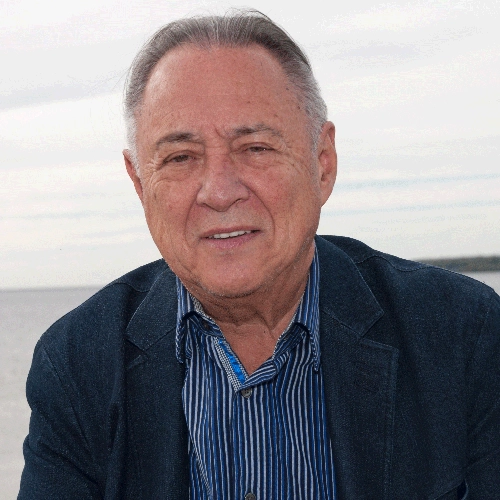
Most Canadians are not aware that the overwhelming majority of people who identify as Indigenous in this country are more than likely their neighbours.
The most recent census figures revealed that over one million of the 1.8 million people in Canada who identify as First Nations, Inuit, and Metis are now living in urban centres. Only about one third of registered Indians still live on the reserve lands of 634 First Nations.
Once out of sight and out of mind, the result of assimilationist government policies for most of Canada’s first century, Indigenous peoples are becoming much more visible.
ANTISEMITISM: What educators need to know and do

The goal of inclusive education and its inherent quest for equity and justice isn’t passive. It calls for us to join the struggle against all forms of racism and bigotry and to accept the responsibility to promote human rights for all our students and colleagues.