
If I was paid every time someone – often it’s a senior leader or manager in an organization – asked me “What if I say the wrong thing?”, I’d be a very wealthy man.
This fear of saying the “wrong” thing is endemic in the workplace. Although I believe most people don’t want to offend someone based on differences such as their gender, race, ethnicity, religion or disability, they inadvertently can. To be interculturally competent, engaging with individuals who are culturally different, should never be about doing the “right thing”; the goal should always be doing the most “effective” thing.
Granted, that’s sometimes easier said than done. But Verna A. Myers’ What If I Say the Wrong Thing? is a good place to start. It’s one of those little books that pack a big punch. In less than 100 pages, Myers offers 25 simple but powerful habits for being more culturally aware and inclusive. I also like the size and format of the book; it can easily be carried in a portfolio. It’s not heavy on theory or academic talk — instead, it feels like advice from a smart, honest friend who’s been there and wants to help you do better. Myers even offers a few of her own faux pas and unconscious biases to illustrate her points.
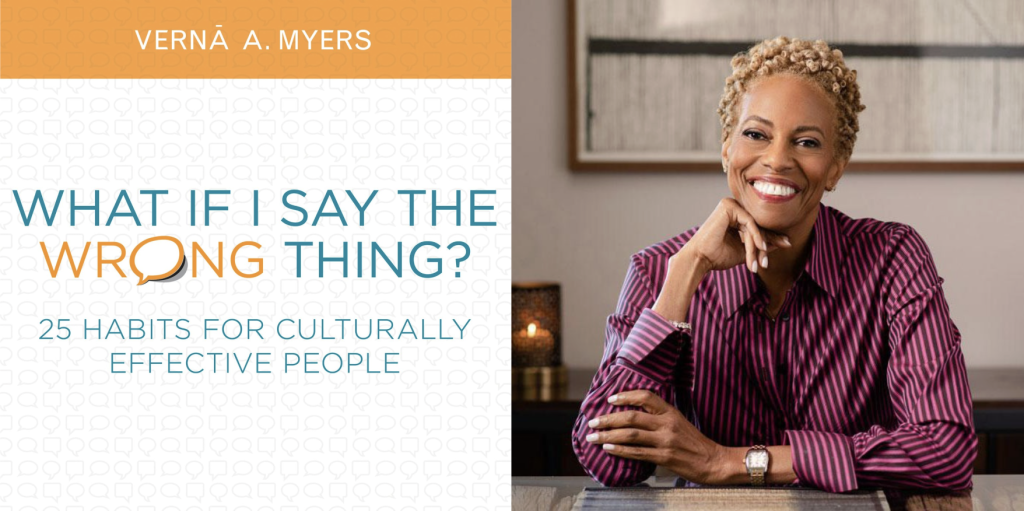
I particularly like her Habit #4, “Can’t we all just get along?” Discovering what we may have in common with another person opens the possibility of exploring our differences. She writes: “There are a million points of contact when you think of people as multidimensional rather than simply boxing them in by virtue of one identity or attribute.”
What makes the book so approachable is how practical it is. Each habit is short, clear, and actionable. Myers reminds us that it’s not about being perfect — it’s about being open, willing to listen, and brave enough to admit when we’ve made a mistake. The title says it all: worrying about “saying the wrong thing” can hold us back, but Myers encourages us to take the risk, learn from it, and keep moving forward.
The book is particularly effective for workplaces, community groups, and individuals beginning their journey in equity, diversity, and inclusion. Each “habit” offers a point of reflection that can spark meaningful conversations or personal growth. Those looking for a deep analysis of systemic inequities or advanced strategies may find the book more of an introduction. Still, it’s an excellent starting point for anyone committed to fostering more respectful, inclusive, and effective relationships across differences.
You can find What If I Say the Wrong Thing? here.