
Associate Spotlight: Q&A with Kennedy Schultz

Why is IDEA (Inclusion, Diversity, Equity, and Anti-Racism) important in your personal and professional life?
I have always had a desire to learn about different cultures. After studying abroad in college, I realized that learning about other cultures helped me gain new perspectives on my own culture and our connection to the wider world. I started my career in language and culture education as a way to teach others about the richness of world cultures and the benefits of developing skills to broaden one’s perspective and create connections across global boundaries…
In Conversation With The Mental Health Commission of Canada

The mental health of employees is foundational to creating a diverse, equitable, and inclusive (DEI) organizational culture because psychological well-being enables individuals—especially those from marginalized or underrepresented groups—to engage fully and safely at work. Likewise, strong DEI programs can positively influence mental health by addressing systemic stressors and creating conditions for all employees to thrive.
Associate Spotlight: Q&A with Adam Benn
What actions do you take to create inclusive environments in your own life?
In my life, I focus on making inclusion a daily practice, and living these values day to day. That means being intentional about making space at the table, understanding the environmental impact of my actions, aligning with businesses and organizations that share my values, and focusing on supporting my communities. For me, it is about taking actions to create a world that I would like to see when I am teaching about inclusion. It also means actively listening, learning, and being willing to change — whether that’s rethinking a decision, acknowledging my own biases, or creating opportunities for others to lead. I also try to build relationships across differences…
The Power and Disempowering of Language in the Trump Era

James Baldwin viewed language as deeply tied to power, identity and historical reality, particularly for marginalized communities. Language, he wrote is “meant to define the other – and in this indispensable, cruelly dishonest role, it can be employed to obscure the truth.” Writers like Baldwin remind us that language is more than just a tool for communication—it shapes thought, reinforces power structures, and influences the way individuals perceive reality.
Faith on the Margins: Christianity’s Evolving Role in a Diverse and Inclusive Canada

Her name was Debbie. I cannot recall her last name, and I have only the vaguest recollection of what she looked like. But I still recall vividly how she was the one person who stepped out of the classroom every morning while the rest of us recited the Lord’s Prayer.
In Conversation With the Stratford Festival

“We’re getting to a place where we’re thinking across the whole experience: How do we welcome people in? And there’s something really joyful about that. So it’s not just the spreadsheet of it being a good business decision. It is the experience of the festival being enriched.”
– Anita Gaffney, Executive Director, The Stratford Festival
Murray Sinclair – Canadian Leader

He was well-known as Justice Murray Sinclair, the first Indigenous judge appointed in Manitoba and only the second in all of Canada. He became a Canadian senator, then chancellor at Queen’s University.
Off the Bookshelf: Under the White Gaze
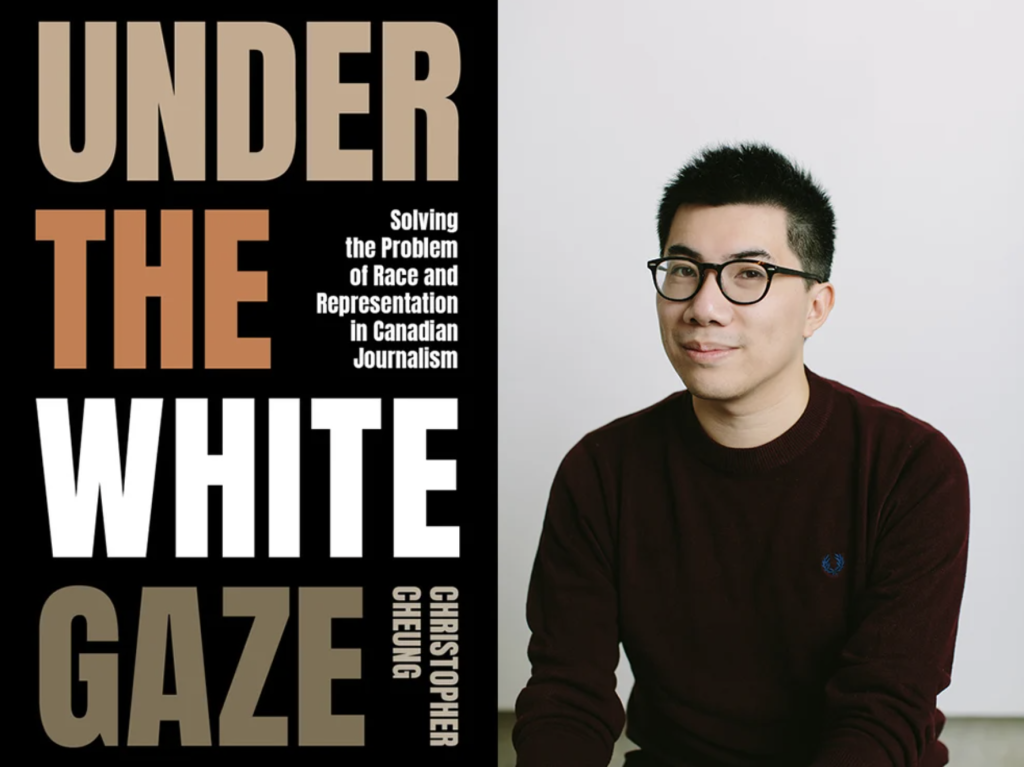
The core tenets of journalism include fairness, accuracy, objectivity, impartiality, and representation. These guiding principles ensure journalists maintain ethical standards as they and the organizations they work for serve the public interest. Too often the profession falls short of these standards, especially in adequately reflecting the wide variety of diversity in the public, in the people it covers, and the reporters telling those stories. This has been an age-old criticism of Canadian media…
Inclusive City Planning: Q&A with Alexandra Lambropoulos

Inclusion, diversity, equity, and anti-racism (IDEA) are foundational to my work in urban planning because cities thrive when they reflect and serve the diverse populations that inhabit them. IDEA informs my personal research interests in community economic development because it focuses on building strong, resilient local economies that benefit all residents.
Off the Bookshelf: North of Nowhere

Marie Wilson’s newly-published “North of Nowhere: Song of a Truth and Reconciliation Commissioner” is a tour de force.
Richly woven, it is part memoir, part documentary. It’s also the kind of book you’ll want to read more than once – not only because it reveals an important part of Canadian history, but because the overall story is so compellingly told.
The book starts with a story about Wilson’s mother-in-law watching Canadian TV at home in the Northwest Territories.