
Canada Needs a Blood Plasma Policy Grounded in Equity

Recent reports that two plasma donors in Winnipeg died following donations to for-profit plasma collection centres have reignited debate about the role of paid plasma collection in Canada. While the circumstances remain under investigation, the provincial health ministry is reportedly considering whether to ban paid plasma donation. These developments raise urgent questions about how Canada regulates an industry that relies on the biological contributions of its donors…
Equity and Inclusion May Be Democracy’s Most Important Skills
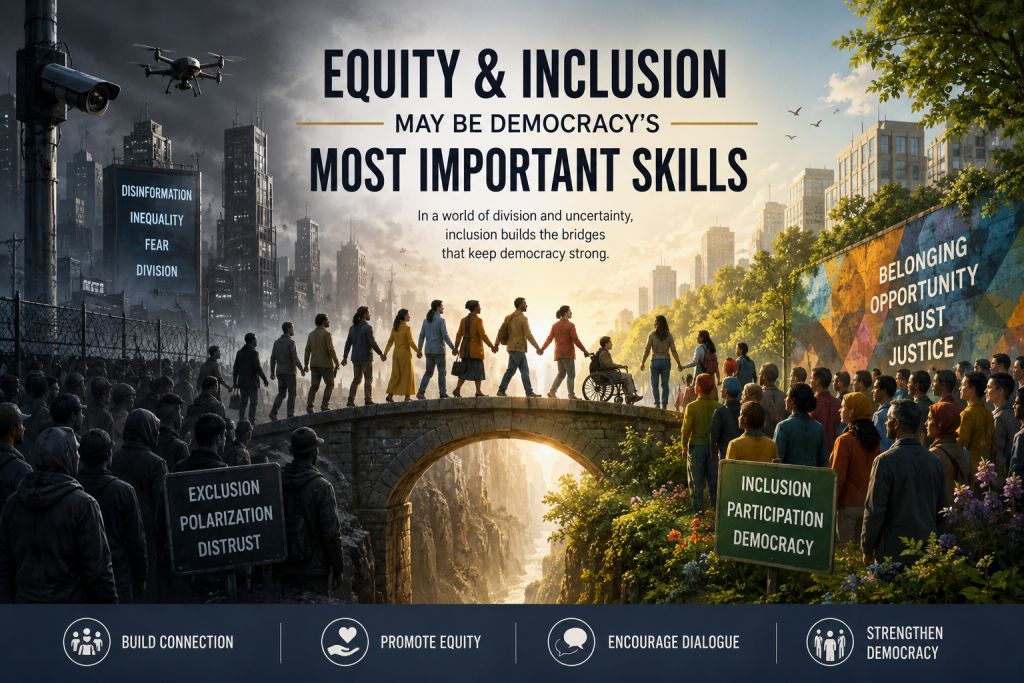
Every so often, a book, film, or conversation stays with me long after it ends. Not because I agree with everything it says, but because it forces me to confront difficult questions. That was my experience watching the film 2073.
So many headlines today are about political polarization, misinformation, social division, climate instability, and the rapid rise of artificial intelligence. We encounter these stories so frequently that they can begin to feel disconnected from one another.
Artemis II Reflects the True Spirit of Diversity, Equity, and Inclusion

Full disclosure: I’m a bit of a space and science fiction nerd. I enjoy reading about space and an imagined future where humans discover ourselves by meeting other beings from other worlds. So it’s no surprise that I, along with millions of other television viewers, watched with amazement and nervous anticipation as the crew of Artemis II blasted off on a column of fire and smoke on its way to the moon.
Off the Bookshelf: Conflict is not Abuse
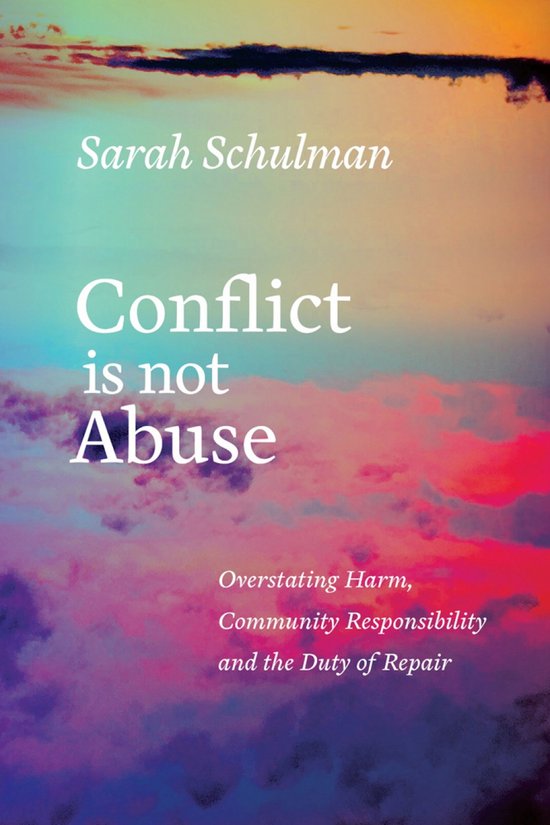
Sarah Schulman’s Conflict is not Abuse urges individuals and communities to distinguish between conflict and abuse, advocating for accountability, direct communication, and repair rather than punitive or avoidant responses. She critiques the overuse of victimhood narratives, warning against binary thinking that leads to unnecessary escalations in personal relationships, social dynamics, and state violence.
The Power and Disempowering of Language in the Trump Era

James Baldwin viewed language as deeply tied to power, identity and historical reality, particularly for marginalized communities. Language, he wrote is “meant to define the other – and in this indispensable, cruelly dishonest role, it can be employed to obscure the truth.” Writers like Baldwin remind us that language is more than just a tool for communication—it shapes thought, reinforces power structures, and influences the way individuals perceive reality.
Recognizing Outstanding Canadians

Receiving the phone call from the Governor General’s office was a mind-blowing
experience. When it came two years ago, I was in disbelief and at a loss for words. I
was being appointed to the Order of Canada – our country’s highest civilian honour – for
my work in diversity, equity, inclusion and social justice.
Off the Bookshelf: Revenge of the Tipping Point

More than 25 years ago Malcolm Gladwell’s book The Tipping Point: How Little Things Can Make a Big Difference had a profound societal impact, influencing a wide range of fields and sparking conversations about how ideas, trends, and behaviours spread. The book’s central thesis – that small, seemingly insignificant actions or events can trigger large-scale social change once they reach a “tipping point” – resonated across industries and cultural discussions. Gladwell became a celebrity…
Shab-e Yalda: Celebrating the Winter Solstice

Shab-e Yalda, also known as Shab-e Chelleh, is an ancient celebration of the winter solstice, which is celebrated today in modern-day Iran, Afghanistan, Azerbaijan, and Tajikistan amongst others. The winter solstice marks the beginning of winter, and the longest night of the year. On this day the sun is at the lowest point in the sky, so the day feels darker. From this point onwards, the length of daylight begins to increase each day, as the sun sets later. Shab-e Yalda translates to Night of Rebirth, referring to the “rebirth” of the sun, which will bring longer days after the winter solstice.
A Challenging Year for DEI, But a Hopeful One Ahead

The diversity, equity and inclusion (DEI) sector had a challenging year, here in Canada but especially in the United States. It was a combination of social, economic, political, and organizational pressures.
Murray Sinclair – Canadian Leader

He was well-known as Justice Murray Sinclair, the first Indigenous judge appointed in Manitoba and only the second in all of Canada. He became a Canadian senator, then chancellor at Queen’s University.